Nov Quay lại danh sách
External Hexagon Bolts cách siết bu lông lục giác ngoài Technical Analysis
Achieving the correct torque and alignment when securing external hexagon bolts is a fundamental requirement for structural integrity in industrial assembly. Improper tightening often leads to material fatigue, stripped threads, or catastrophic joint failure, making the technical approach to fastener installation a critical safety variable.
In precision manufacturing, the process of securing these components is not merely about force, but about managing the tension and friction between the bolt head and the mating surface. This involves a combination of the right tooling, specific torque sequences, and an understanding of material properties to prevent accidental loosening.
Whether you are managing a large-scale construction project or maintaining precision machinery, understanding the professional cách siết bu lông lục giác ngoài (method of tightening external hexagon bolts) ensures that your assemblies remain secure under operational stress.
Fundamentals of Hexagonal Fastening
The external hexagon bolt is designed to allow high torque application through the use of a wrench or socket, distributing the load across six flat surfaces. This geometry is essential for achieving the necessary clamping force that prevents the joint from separating under shear or tensile loads.
Effective fastening begins with the alignment of the bolt axis perpendicular to the workpiece. Any angular deviation during the initial stage of tightening can lead to cross-threading or uneven pressure distribution, which significantly reduces the fatigue life of the fastener.
Technical Factors in Torque Application
Torque is the rotational force applied to the bolt, but the ultimate goal is "preload"—the tension created in the bolt that clamps the parts together. The relationship between applied torque and preload is influenced by the coefficient of friction between the threads and under the bolt head.
Dry threads provide higher friction, which can lead to deceptive torque readings where the tool indicates the target torque has been reached, but the actual clamping force is insufficient. Conversely, lubricated fasteners reduce friction, allowing more of the torque to be converted into preload, though this requires a downward adjustment of the target torque to avoid over-stretching the bolt.
Consistent application requires a systematic tightening sequence, particularly in multi-bolt flanges. A star or criss-cross pattern is typically employed to ensure that the mating surfaces are drawn together evenly, preventing warping and ensuring a leak-proof or stable seal.
The Role of Tooling Precision
The choice of tool directly impacts the precision of the fastening process. While standard wrenches are suitable for general assembly, critical industrial applications demand calibrated torque wrenches that provide a precise stop or a digital readout when the target value is achieved.
Tooling accuracy is the primary safeguard against the two most common failure modes: under-tightening, which leads to vibration-induced loosening, and over-tightening, which causes plastic deformation of the bolt threads.
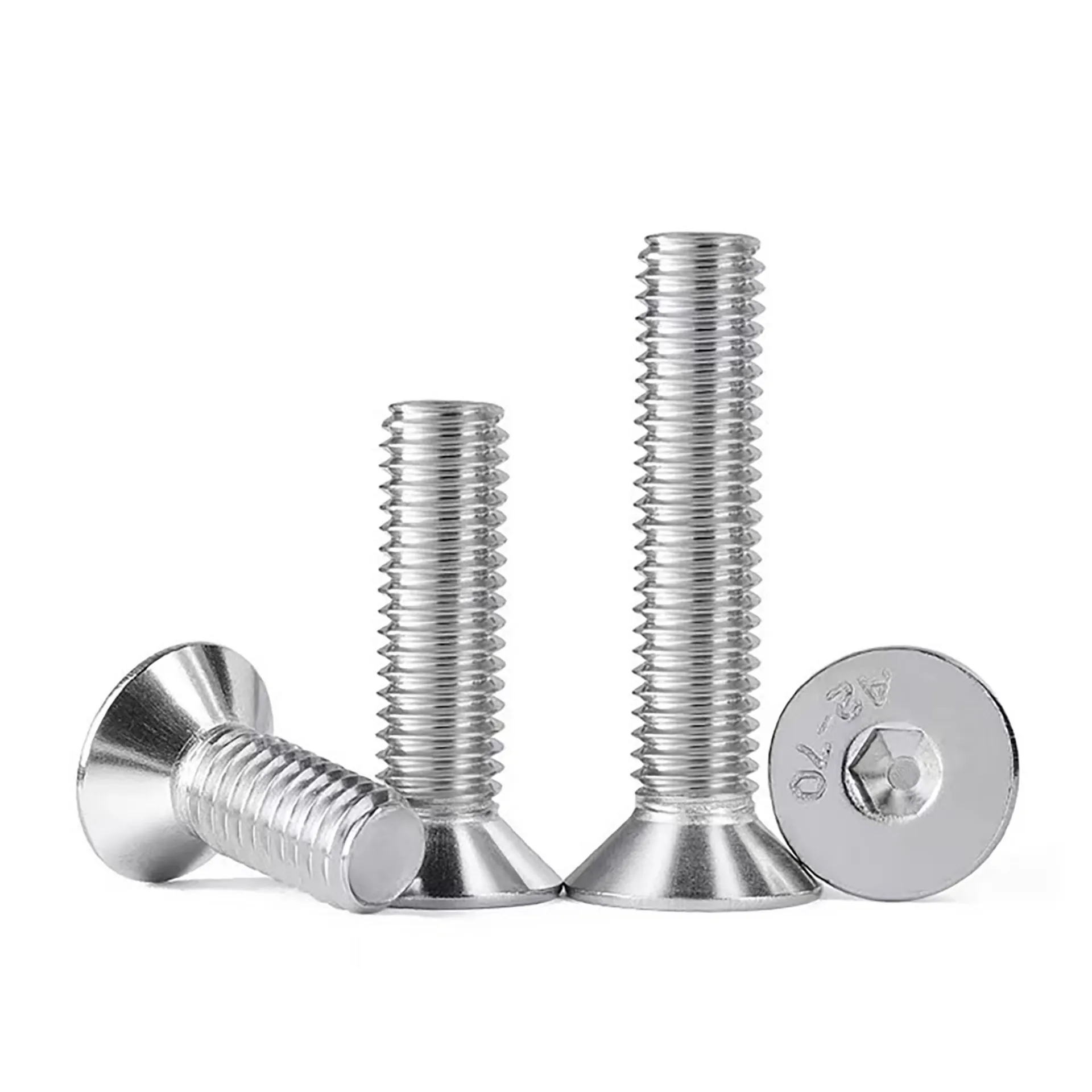
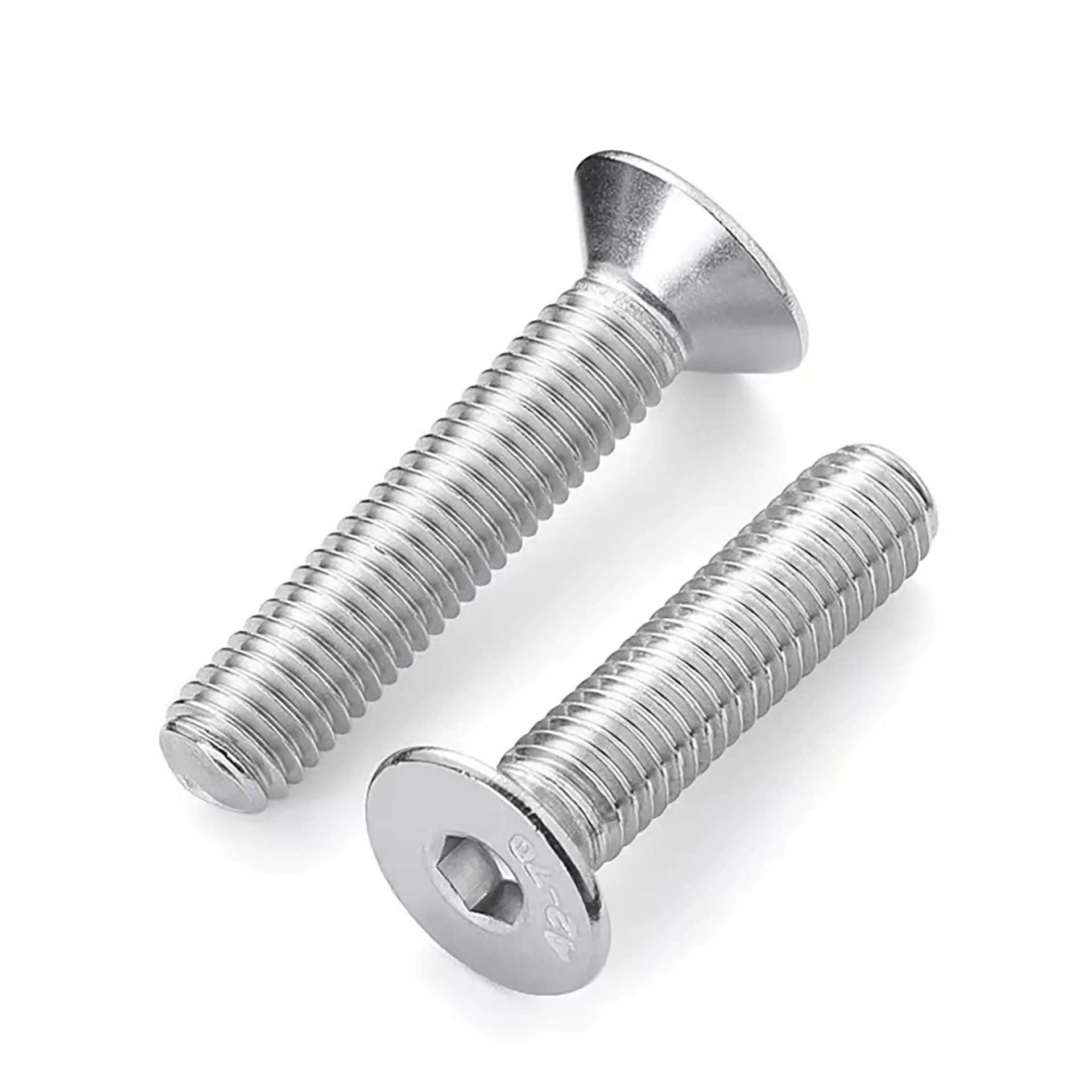
For applications requiring high disassembly resistance or flush finishes, specialized fasteners like the hexagon socket countersunk head cap screws are used. These require a dedicated hex key, and the internal drive mechanism allows for higher torque transmission with less risk of "rounding" the head compared to external flats.
Torque Efficiency Correlation Index
Analyzing the efficiency of the fastening process involves comparing the applied torque against the resulting clamping force across different material grades and lubrication states. This correlation is vital for engineers to determine the safety margins of a joint.
The following index illustrates the relative ability of different fastening conditions to maintain a stable preload over time, considering variables such as surface roughness and fastener coating.
Figure 2. Preload Stability Index by Fastening Method
Operational Scenarios and Challenges
In high-vibration environments, such as automotive chassis or industrial conveyor systems, the primary challenge is "self-loosening." This occurs when transverse vibrations cause the bolt to rotate slightly, reducing the preload. To combat this, manufacturers often employ locking nuts or spring washers to maintain constant tension.
Another critical scenario involves corrosive atmospheres, such as marine or chemical processing plants. In these cases, the choice of material, such as A4-316 stainless steel, is as important as the tightening method. Corrosion can cause "galling" during the tightening process, where the threads seize, leading to premature failure and making disassembly nearly impossible.
Trends in Intelligent Fastening Systems
The industry is moving toward "smart fastening," where electronic torque transducers provide real-time data to a central monitoring system. This eliminates human error and provides a digital "birth certificate" for every joint in a critical assembly, ensuring 100% compliance with engineering specifications.
Furthermore, there is an increasing focus on lean manufacturing for SMEs. By optimizing the inventory of standard fasteners and using factory-direct sourcing, companies can reduce supply chain cycles while maintaining strict quality control, such as ISO 9001 compliance.
Future developments are likely to see the integration of ultrasonic measurement to verify actual bolt elongation (strain) rather than relying on torque, which is an indirect measure of clamping force. This shift will allow for even higher precision in aerospace and high-speed rail applications.
Fastener Selection Decision Framework
Selecting the right fastener requires a balance between strength, corrosion resistance, and installation efficiency. A mistake in selection can render even the most precise tightening method ineffective.
For instance, when a flush finish is required for aesthetic or safety reasons, countersunk head designs are preferred. These are often found in electronics and lighting fixtures where a protruding bolt head would interfere with the assembly or the final product design.
The following framework provides a relative assessment of different fastener types based on typical industrial requirements.
| Fastener Type | Clamping Force | Installation Speed | Anti-Loosening |
|---|---|---|---|
| Hexagon Bolt | Very High | Medium | Moderate |
| Socket Head Cap | High | Medium | High |
| Flange Bolt | High | High | Moderate |
| Countersunk Head | Moderate | Medium | High |
| Carriage Bolt | Moderate | High | Moderate |
| Anchor Bolt | Extreme | Low | High |
Questions & Answers
Torque is the rotational effort applied to the fastener head, while preload is the actual tension created within the bolt as it stretches slightly to clamp two surfaces together. Because a significant portion of applied torque is lost to friction (in the threads and under the head), torque is used as an indirect proxy to estimate the preload. Precision tightening requires accounting for the friction coefficient to ensure the correct preload is achieved.
A star or criss-cross pattern ensures that the clamping force is distributed uniformly across the mating surfaces. If bolts are tightened in a circular sequence, the material may tilt or warp, creating gaps on the opposite side of the joint. Uniform pressure is essential for maintaining seals in flanges and preventing structural stress concentrations that could lead to cracking or leaks in high-pressure systems.
Lubrication reduces the friction between the threads and the fastener head. This means that for the same amount of applied torque, a lubricated bolt will achieve a significantly higher preload than a dry bolt. If a torque specification designed for dry bolts is applied to lubricated ones, there is a high risk of over-stretching the bolt beyond its elastic limit, potentially leading to thread failure or bolt breakage.
Socket head fasteners are ideal when space is limited, as they require a smaller tool footprint than an external wrench. They also typically allow for higher torque application without slipping (rounding) and provide a cleaner aesthetic. In contrast, external hexagon bolts are generally faster to install in open areas and are more common in heavy construction where large impact wrenches are utilized.
Over-tightening can push a bolt into its plastic deformation zone, meaning it will not return to its original length after the load is removed. This weakens the fastener and can lead to "necking," where the bolt diameter narrows and eventually snaps. Additionally, over-tightening can crush the mating surfaces or strip the internal threads of the nut or tapped hole, compromising the entire joint's integrity.
Preventing loosening involves increasing the friction or creating a mechanical lock. Common methods include using nylon-insert lock nuts, spring washers, or chemical thread-locking compounds. For extreme cases, safety wiring or specialized wedge-locking washers are used. The most effective method, however, is ensuring a high and consistent initial preload, which increases the friction between the threads and prevents rotation.
Final Thoughts
The technical discipline of securing external hexagon bolts is a cornerstone of industrial reliability. By focusing on the intersection of correct tooling, torque sequences, and material selection, manufacturers can ensure that their products withstand the rigors of operational stress without failure.
As the industry moves toward more standardized, high-value fastener solutions, the emphasis shifts from mere strength to precision and predictability. Partnering with manufacturers who prioritize ISO-certified quality and consistent tensile strength ensures that every joint is a reliable link in the industrial chain.
- External Hexagon Bolts cách siết bu lông lục giác ngoài Technical Analysis
- 12 Point Internal Drive Fastener thông số kỹ thuật vít lục giác rãnh mười hai Technical Analysis
- DIN 933 Bolt chiều dài bu lông din 933 Technical Analysis
- Socket Head Fasteners cách đọc thông số bu lông lục giác trên bản vẽ Technical Analysis
- DIN Bolt cách ghi thông số bu lông din trên bản vẽ Technical Documentation